2022年6月20日星期一

Wheel Bearing Troubleshooting and Repair


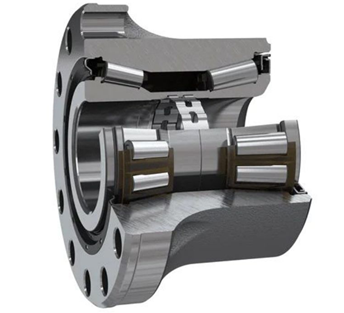
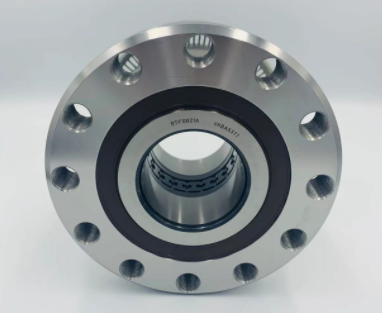
Truck Hub Bearing


It starts with a noise. With the radio on and wind from the windows, it's easy to ignore at first. But the more miles you drive, that subtle noise grows to a metal-on-metal grinding sound you can't ignore.

You might notice other signs as well, including wobbly steering or uneven wear on your tires. These are all signs of your wheel bearing going bad, and they should all be taken seriously. Otherwise, you may end up losing the wheel while driving, which could be catastrophic.

Our advice? Know the symptoms and causes of wheel hub failure, and get it fixed as soon as possible.


Symptoms of a Bad Wheel Bearing

The symptoms of a bad wheel bearing are relatively straightforward: You'll hear a grinding noise until you're driving fast enough that road noise masks it (50mph and faster). The noise indicates metal-on-metal rubbing at a fast rate and comes from the faulty bearings scraping against their housing and, worse, the wheel hub around them.

If it's the front hub bearings, turning the steering wheel may cause the noise to get worse or change in pitch.


Common Causes of Failure

The most common cause of wheel hub bearing failure impacts. When the tire and wheel hit an object or road defect hard, the bearings can be damaged. Likewise, broken or worn seals can allow moisture or debris into the hub, causing the bearings to deteriorate.

Other things that can cause premature bearing failure are:

  • Out of balance tires/wheels

  • Worn or broken suspension components

  • High performance, low profile tires

Typically, these sorts of long-term wear-and-tear symptoms will also cause damage to ball joints, tie rods, struts, and other chassis/suspension components.

Two other problems that are often left undiagnosed when wheel bearings repeatedly fail are a worn bearing hub and transient current flow through the knuckle. If the bearings were grinding or otherwise making their failure known for any period of time, it's likely that the bearing hub took some damage. When removed, it will show signs of scraping or dimpling. It may also be out of round. Any of these means the hub should be replaced.

Premature wear can also be caused by transient current flow, which is the friction created by faulty electrical grounds which allow current to build upon the moving parts of the chassis. Vehicles build up static electricity during operation and this is usually dissipated by the vehicle's ground points. Bad ground points = bad news.


Solving the Problem

In a shop, there are several methods for finding bad wheel hub bearings, including directional microphones or ultrasound. In the do-it-yourself mechanic's garage, however, simpler methods, though more time-consuming, are just as effective.

Simply listening to the wheel hubs as someone drives the vehicle can indicate which one is bad. With someone driving at 10-20 miles per hour, listen carefully to the grinding sound so you can pinpoint which wheel the noise is coming from.

If the problem wheel hub can be narrowed down to at least one axle, time will be saved. If not, the next test should be done on each wheel.

Safely lift the car and remove the tire and wheel. Then, rock the hub (via the hub itself) with hands on the top and bottom (12:00 and 6:00 o'clock). If there is any giveback and forth (towards or away from the car), the bearing is likely bad.


Replacing the Bearing

Luckily, bearings aren't difficult to replace, and most modern vehicles use either bolt-in or pressed-in bearings. With the right tools, you can perform this replacement by yourself:

  • Park your car on a safe, flat surface and secure the wheels you aren't working on with wheel chocks.

  • Loosen the lug nuts and use the wheel jack to lift the wheel.

  • Remove the lug nuts, and take off the wheel.

  • Remove the brake caliper using a socket wrench.

  • Take off the dust cover, cotter pin, and castle nut. The dust cover is a small plastic or metal cap that protects the rotor's components and can normally be removed with calipers. Beneath the dust covers are the castle nut and cotter pin, which can be removed with pliers.

  • Remove the rotor. First, remove the outer bearing, then the rotor itself. If it gets stuck, use a rubber mallet to jar it loose.

  • Unscrew the hub bolts and take off the old hub. The wheel bearing is behind the hub.

  • Disassemble the hub assembly. You'll need to take apart the hub to get access to the bearings.

  • Take off the races and clean the knuckle. This usually involves breaking the races with a hammer and chisel or a grinder. Once the races are gone, clean the knuckle inside the bearing assembly. Have rags handy – there will probably be a lot of greases!

  • Install the new wheel bearings and races. Have a hammer handy to set the races in place with a few taps, then grease the new inner assembly and install it. Use plenty of greases and make sure the bearings are properly aligned and pushed in as far as they can go.

  • Lastly, reinstall everything in reverse order, and lower the vehicle from the jack.

Pay careful attention to the type of grease employed, the packing itself, and the alignment of the bearings in the hub.


Pressed In Bearings

With pressed-in bearings, which are more common today, the procedure is a bit more complex.

The wheel bearings reside between the steering knuckle and the hub itself, packed between the outer bearing seal and the CV joint. Removing and replacing these bearings requires a press made specifically for the job and each vehicle will be slightly different. Attempting to “pound out” the bearings with a screwdriver or other tool will result in serious damage to the vehicle's hub and/or knuckle. The upside is that when pressed-in bearings require replacement, they are removed and replaced in one-piece units that come pre-sealed and lubricated.

In all, a vehicle's wheel hub failure is most likely caused by something other than the hub. Fixing the hub failure is relatively simple, but diagnosing the cause of the failure may not be as easy.


Introduction of Truck Bearing Manufacturer

Truck bearings are an important part of truck tires. As trucks are often driven on muddy, bumpy roads with poor road conditions and are often overloaded, the quality requirements for truck bearings are even more stringent. Qianyu Auto Parts Co., Ltd. is a professional truck bearing manufacturer with more than 20 years of experience in truck bearing manufacturing. The products have passed ISO/TS16949, ISO9001, EU CE certification, and other certificates, and the quality is reliable. Approved by customers in more than 50 countries.

2022年6月11日星期六

Most Widely Used Bearings: Deep Groove Ball Bearings


Single-Row Deep Groove Ball Bearing


Deep Groove Ball Bearings

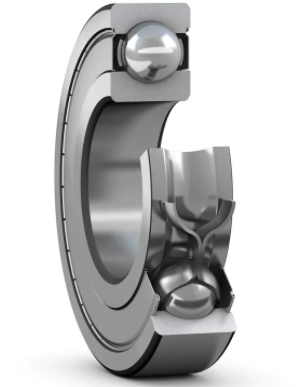
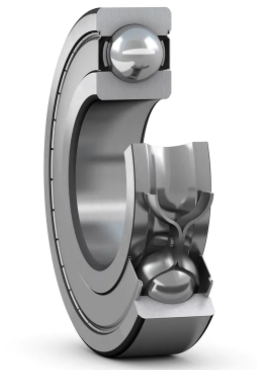
Deep groove ball bearings are the most widely used bearings in the industry, they are composed of the outer ring, inner ring, bearing cages, balls, and seals. Deep groove ball bearings are available in both single and double-row designs. Single row ball bearings are the most popular of all rolling bearings. They are simple in design, nonseparable and suitable for high-speed operation, and require little attention in service.

Bearing clearance refers to the amount of clearance between the inner ring, outer ring, and balls. clearance will influence the bearing life span and rotation speed, you need to choose different clearance when using in different conditions, According to the international standard clearance is classified into 4 groups. Small Clearance ( C1/C2), Normal Clearance (C0), Bigger clearance (C3), Big clearance (C4/C5) can be produced bearings according to the customer’s requirement of clearance.

The deep groove ball bearings deep groove enable axial loads to be carried in either direction. Bearings are available with shields and seals can be supplied with the correct quantity of grease and used in operating temperatures between -30 to + 110 deg Celsius. Special bearings operate over a wide range. Re-lubrication in service is not required, Shielded and sealed bearings are primarily intended for applications where the inner ring rotates. In the case where the outer ring rotates, there is a risk that lubricant will be lost and the manufacturer should be consulted.

Deep groove ball bearings come in many sizes, materials, and varieties according to customer needs, including special industrial needs such as high-temperature applications. High-temperature bearings are made to withstand temperatures up to 350 deg Celsius.


Many Industries use deep groove ball bearings such as:

  • Agricultural

  • Food Processing

  • Machine tools

  • Material handling

  • Medical / Pharmaceutical

  • Printing

  • Railway and Transportation

  • Wind Energy

  • Automation control

  • Home Appliances

>> Shop for Single-Row Deep Groove Ball Bearings here


Features of deep groove ball bearings:

Simple in design with its wide dimensional scope: They are simple in design robust in operation and easy to maintain.

High rotational speed: Deep groove ball bearings are made with high-quality steel for premium performance in demanding applications where there are high loads and high rotational speeds.

Capable of receiving radial and bidirectional axial load: Deep groove ball bearing can support axial forces in both directions as well as radial forces. They had the capacity to handle greater loads and were versatile enough to be used in many applications.


Advantages of deep groove ball bearings:

Lower Noise Level means quieter in operation: The deep groove ball bearing is quieter in operation due to better quality of balls, the optimized surfaces, the higher stability of cages. They run very smoothly.

Lower Friction leads to lower Energy cost for operation: The friction in the bearing is reduced by optimizing surfaces, waviness, and roundness. The lower friction gives longer life.

Improved Sealing means efficient protection against contamination: Deep groove ball bearings with seals on both sides are greased using a high quality of grease, lubricated for life, and suitable for high speeds. They provide excellent sealing efficiency and exclusion of contaminants.

Better bearing life due to reduced lubricant loss: Deep groove ball bearings filled with customer-specific greases to meet specific application needs and operating conditions.


We are a Single-Row Deep Groove Ball Bearings supplier. Please feel free to contact us if you need them!

2022年6月3日星期五

The Logic Behind Bearing References


62200 62300 2RS ZZ C3


bearing reference is not just a number. It contains a lot of information about the bearing. In this blog (reading time: 3 minutes) we will show you three important product characteristics in bearing references. You will be a bearing expert in no time!


Composition of bearing references

First, something about the complete bearing reference. It usually consists of numbers, sometimes combined with letters. The so-called prefixes and suffixes indicate additional properties of the bearing. Often manufacturers use different prefixes or suffixes for similar features. Without an explanatory list, they are confusing. You will find some examples of different prefixes and suffixes.

Fortunately, there is a clear logic behind the basic designation: the part of the bearing number without the prefixes and suffixes. These references are determined according to rules that most manufacturers follow. When you know the “formula”, you can easily discern some important details. Let’s see how that works.


Part 1: The bearing type

The basic indications consist of three fixed components. A first part is a number, a letter, or a combination of these. This is the description of the bearing type.

The following overview shows the most common bearing types:

  • 0 Angular contact ball bearing double row

  • 1 Self-aligning ball bearing double row

  • 2 Spherical roller bearing, spherical roller thrust bearing

  • 3 Tapered roller bearing single row

  • 4 Deep groove ball bearing double row

  • 5 Thrust ball bearing single or double direction

  • 6 Deep groove ball bearing single row

  • 7 Angular contact ball bearing single row

  • 8 Cylindrical roller thrust bearing

  • C CARB roller bearing

  • N Cylindrical roller bearing single row

  • QJ Four-point contact ball bearing

The 6203-C3 bearing begins with “6” and is, therefore, a single-row groove ball bearing. And the 7416-B-MP is a single-row angular contact ball bearing because it begins with “7”. The first number gives a quick indication of the bearing type.


Part 2: The size series

Now we come to the second part of the basic designation. This is the “size series”. The first number of this section, which is sometimes omitted, indicates the width (for radial bearings) or height (for axial bearings)*. The second number of the size series refers to the outside diameter.

*Radial bearings capture forces perpendicular to the shaft, while axial bearings capture forces in the longitudinal direction of the shaft.

The higher the value, the wider the inner and outer rings. Often the ball size will also increase. Bearings with higher values can be subjected to heavier loads.

In our first example of 6203-C3, the size series is “2”. The table shows this is an average width class. And in our second example of 7416-B-MP, the size series is “4”. Which means it can withstand a (relatively) heavier load.


Part 3: The inner diameter

Finally, the third part of the basic designation. This refers to the inside diameter, also called the bore. These are the last 2 digits in the basic designation. A simple formula will calculate the inside diameter.

Is the number 04 or greater? Then multiply this number by five to get the inside diameter (in mm). Very simple. But there is (of course) an exception. If the number is less than 04, the inner diameter is as shown below:

Code Inside diameter

  • 00  10 mm

  • 01  12 mm

  • 02  15 mm

  • 03  17 mm

Back to our examples. For 6203-C3, “03” indicates the inside diameter. The table above shows it is 17 mm. For 7416-B-MP, “16” indicates the inside diameter. A quick calculation (16 x 5) shows the inside diameter of this bearing to be 80 mm. It’s as simple as that.


We are a high-end auto bearing manufacturer. As a high-end brand in the automobile bearing manufacturing industry, Qianyu Auto Parts has more than 20 years of experience in automobile bearing design and manufacturing, which can meet the most stringent requirements of customers. Products through ISO/TS16949, ISO9001, THE EU CE certification, and other certificates, won domestic and worldwide customer recognition. If you are interested in our products, please contact us now!

2022年5月26日星期四

5 FAQ About Wheel Hub Bearings


truck bearing


The more your shop knows about wheel hub bearings, the better you can serve your customers. Below, you'll find 5 common questions technicians have about wheel hub bearings.


1. Can Potholes Really Cause Severe Wheel Bearing Damage?

Short answer, is yes. Under normal circumstances, wheel bearings last a long time. Yet, potholes can do quite a number on bearings. Potholes can cause a small indentation in the bearing races. When that happens, the bearings get hung up in the depression in the race. That means the wheel bearing can't rotate as freely anymore. In addition, the bearing now has slightly more slop. Over time, the problem gets worse and worse.

It's important to be able to pinpoint why the wheel bearing was damaged. Potholes are one of the most common, yet overlooked, causes of wheel bearing damage. Here's a list of signs that indicate possible pothole damage to the wheel bearing:

  • Clunking noise

  • Rattling noise

  • Shaky steering wheel

  • Wobbly wheel

  • Poor alignment

  • Tire marks on the wheel well

  • Damaged bump stops

  • Wheel damage (cracks or dents)


2. How Can I Make Sure The Air Gap For A Wheel Speed Sensor Is Correct After Installing A Bearing?

It's important to keep the right distance (air gap) between the end of a wheel speed sensor and its ring. If the gap is too wide, the signal won't be strong or reliable. It'll be weak, erratic, or nonexistent. If the gap is too close, there may be some metal-to-metal contact.

When you install a new wheel bearing, the wheel speed sensor gap might change. When this happens, the ABS light will come on in the customer's car after they leave your shop. To prevent this from happening, check the wheel sensor gap after installing a wheel bearing. To do this:

  • Attach a voltmeter to the wheel speed sensor's terminals.

  • With your hand, spin the tire at a rate of about 1 revolution per second.

  • Check the reading on the voltmeter. If the air gap is correct, the wheel speed sensor will generate between 50 and 77 millivolts AC. If the output is low, or if there's no output, the gap may be too wide.


3. Can Bad Alignment Angles Like Camber And Toe Cause Premature Failure Of A Wheel Bearing?

Yes. A bad alignment angle can cause a wheel bearing to fail. If the vehicle is out of alignment, the driver has to keep the steering wheel turned slightly to keep the car going straight. This adds stress to the wheel bearing, and ultimately causes the bearing to wear down faster.


4. How Should Surfaces On Axles And CV Joints Be Cleaned Or Polished Before A Bearing Is Replaced?

When replacing a wheel bearing, it's good practice to clean or polish the bearing surfaces on axles and CV joints. It's to help extend the life of the axles and CV joints. By cleaning those parts, you would be removing sludge, metal shavings, and any old differential oil that has been sitting there for a while.

The proper way to clean or polish those parts is to:

  • Remove those parts from the vehicle.

  • Cover the surfaces with brake cleaner or another degreaser.

  • Wipe down the surfaces with a dry shop rag until clean.

If you find any hardened grease stuck on the axle, scrub it with a non-metallic scrubbing pad and degreaser.


5. What Is The Proper Inspection Method For A Seal?

You can visually inspect the wheel bearing seal. Grab a flashlight and then inspect it for:

  • Leaks

  • Cracks

  • Twists

  • Breakage

Sometimes the cracks are so fine that they are difficult to see. It takes a little patience to do a thorough inspection.


We are a Truck Hub Bearing supplier. Please feel free to contact us if you need them!

2022年5月18日星期三

How Long Do Wheel Bearings Last?

Wheel bearings are low-maintenance parts, but that doesn’t mean they last forever. So, what does a wheel bearing actually do? How long does it last? And how can you help extend its lifespan?


What is a wheel bearing? And what does it do in a car?

A wheel bearing is a crucial part of the wheel assembly that connects the wheel and the axle. It is a set of steel balls (ball bearings) or tapers (tapered bearings), held together by a metal ring. It enables the wheel to rotate smoothly with a minimum of friction. Wheel bearings are safety critical components designed to sustain radial and axial loads caused by gravitation, acceleration, breaking & cornering forces, so they need to be replaced when they stop working properly.


How long does a wheel bearing last?

Wheel bearings have an average lifespan of 136,000 to 160,000 km (approximately 85,000 to 100,000 miles). This is only a rule of thumb though, the actual lifespan of a wheel bearing depends on the quality of the wheel bearing and the operating conditions.


Why do wheel bearings fail?

The main reasons that a wheel bearing fails are:

  • Faulty installation – inappropriate tools such as a hammer or an impact wrench can cause damage to the exterior and or interior of the wheel end bearing causing the wheel bearing to fail prematurely.  Also, re-using the old accessories such as bolts, nuts, circlips, split pins, seals,… instead of replacing them with new ones can cause the wheel end bearing to operate under abnormal or unsafe conditions, increasing wheel end bearing wear and risk of a car accident.

  • Impact damage or poor road quality – all impacts from driving through a pothole, driving over speed bumps or hitting the curbstone can damage a wheel bearing and reduce its lifespan.

  • Poor quality wheel bearing – a wheel bearing is continuously under enormous pressure. Wheel bearings constructed of low-quality materials can have poor heat-treatment, resulting in premature wear and failure.

  • Driving conditions – driving through deep water or mud can cause your wheel bearings to fail. Water, mud or other contaminants such as dust or road salt could get past the seals and enter the bearing, polluting the grease and wearing away the bearings.

  • Car modifications – fitting bigger or wider rims, tires with lower thread walls, stiffer shock absorbers and suspension springs cause higher loads on the wheel bearing and can accelerate wear. Stick to rims, tires, shock absorbers and springs that are specified by the car manufacturer to minimize the impact on the longevity of the wheel bearings.


What are the symptoms of bad wheel bearings

The symptoms of bad wheel bearings include:


  • A humming, rumbling or growling noise that increases with acceleration or as the vehicle turns.

  • A loud constant whining or grinding noise when the vehicle is in motion.

  • Clunking noises when driving over uneven road surfaces.

  • Looseness, excessive play in the steering wheel (vague steering);

  • Steering wheel vibration which changes with the vehicle speed or as the vehicle turns;

  • ABS malfunctioning. ABS system issues can be related to failure of the ABS sensor that is integrated in the wheel end bearing.


How Much Does a Wheel Bearing Replacement Cost?

The cost of a front wheel bearing replacement varies greatly among vehicle applications. Typically an estimate on a front wheel bearing repair for a domestic front-wheel drive car will be from $250 to $400.

Asian imports in the years 1980s to early 2000s would be pricier at $300 to $400 because of a two-piece hub and bearing design that will require higher part and labor costs. Modern rear-wheel drive light trucks carry a price of a front wheel bearing replacement of $300 to $400. European imports generally will estimate at a $400 — $600 replacement cost because of parts costs being higher.

Rear-wheel bearing replacements are a different story. Front-wheel drive vehicles have rear bearings that are not connected to the axle and drivetrain mechanism. They are easily replaced as a bolt-on assembly and estimate at $100 — $200 in most applications. Rear-wheel drive vehicles such as light trucks have wheel bearings that are pressed fit to the rear axle housing or onto the axle themselves.

Repairs on rear-wheel drive bearings require more extensive labor time because of extra steps that are involved in the process. Many Toyota and Nissan light trucks can estimate out at over $1,000–1,200 for rear axle bearing replacements.


What are the risks of driving with bad wheel bearings?

It's very rare for wheel bearings to fail immediately and completely after you notice the first symptom(s).

Having said that, it is best to avoid driving with a worn wheel bearing for any length of time. As we've already seen, the wheel bearing is essential for connecting your wheel to your car, and any weakness in this connection could have severe consequences for your drive-axle and steering assembly – as well as for your safety.


Wheel BearingReplacing your wheel bearings

Despite the fact that modern wheel bearings are easier to install than previous generations, correct installation, the usage of appropriate tools and respecting the specified torque values are still essential for maximum performance, durability and safety. Therefore, we recommend having your wheel bearings fitted by a professional mechanic that has the skills and the tools to do the job.  


Quality replacement parts

When replacing your wheel bearings, it is essential to look for high-quality parts. MOOG offers a complete range of easy to install, premium quality, long-lasting wheel end bearings that are engineered, manufactured, tested, and validated to OEM standards for maximum performance and durability.

Longfei Bearing has more than 20 years of experience in automobile bearing design and manufacturing, which can meet the most stringent requirements of customers. Products through ISO/TS16949, ISO9001, THE EU CE certification, and other certificates, won domestic and worldwide customer recognition. The initial design concept of the plant was to produce bearings of high quality and performance based on the following core principles.

We would love to hear your feedback! Contact us to share your thoughts!

2022年5月9日星期一

Telltale Signs of A Worn Wheel Hub Bearing and Common Causes of Failure


Wheel Hub Bearing


A worn wheel hub bearing is a pretty big deal. If you let it go on long enough, the wheel could literally fall off while you’re driving. That could cause a catastrophic accident that puts your life and others’ lives at risk. That’s why it’s important to watch out for the signs of a worn wheel hub bearing.

We put together a comprehensive list of telltale signs of a worn wheel hub bearing. Read on to find out what they are.


Telltale signs of a worn wheel hub bearing

1. Unusual Noises

“Unusual noises” is quite vague, but for a good reason. There are many, many unusual noises associated with a worn wheel hub bearing. Some of the most common noises include:

Knocking/Clunking Noise While Turning

When a wheel hub bearing wears out, it puts extra stress on the CV-joint. That can cause the knocking/clunking noise when you turn the vehicle.

Crackling Noise

The crackling noise is a result of a worn or damaged outer CV-joint. It may also mean excessive bearing endplay due to poor clamping.

Rumbling/Growling Noise

This noise is particularly prominent when the vehicle is traveling in a straight line. It gets worse when the vehicle is turning slightly at a speed of 15-50 mph. In a normal situation, you can pinpoint the problematic wheel bearing if you hear this noise. In most cases, the bad bearing is the cause of the rumbling noise.

Grinding Noise

If you hear a grinding noise, that means there’s a loss of integrity in the steering or suspension system. For instance, there may be roller or raceway damage. When you have a worn wheel hub bearing, this noise is prominent when the vehicle is turning.

If you’re hearing unusual noises, this guide will help you determine which wheel hub is bad.


Wheel Hub BearingWheel Hub Bearing


2. Loose Steering Wheel

When a wheel hub bearing goes bad, you may feel some looseness in the steering wheel. When a bearing wears down, it becomes loose within the wheel hub and spindle. This will make your steering wheel feel loose.

3. Vehicle Pulling To The Side When Brakes Are Applied

Worn bearings become loose. As a result, excessive runout happens. This causes the brakes to pulsate or pull. In other cases, a corroded or pitted bearing transmits the vibration through the steering. This can cause pulling to one side, too. Your vehicle will pull to the side of the failed wheel bearing.

4. Uneven Tire Wear

This happens when the wheel bearing becomes bad enough. Most likely, you will hear noises before uneven tire wear happens. A worn wheel bearing makes the wheel loose. This causes the tire to wear out unevenly.

5. Wheel Vibration And Wobble

When your wheel is vibrating and/or wobbling, the bearing is very loose. It’s because the bearing has lost its clamp. There may be some severe mechanical damage, too.


Common Causes of Failure

The most common cause for wheel hub bearing failure impacts. When the tire and wheel hit an object or road defect hard, the bearings can be damaged. Likewise, broken or worn seals can allow moisture or debris into the hub, causing the bearings to deteriorate.

Other things that can cause premature bearing failure are:

  • Out of balance tires/wheels

  • Worn or broken suspension components

  • High performance, low profile tires

  • Typically, these sorts of long-term wear-and-tear symptoms will also cause damage to ball joints, tie rods, struts, and other chassis/suspension components.

Two other problems that are often left undiagnosed when wheel bearings repeatedly fail are a worn bearing hub and transient current flow through the knuckle. If the bearings were grinding or otherwise making their failure known for any period of time, it’s likely that the bearing hub took some damage. When removed, it will show signs of scraping or dimpling. It may also be out of round. Any of these means the hub should be replaced.

Premature wear can also be caused by transient current flow, which is the friction created by faulty electrical grounds which allow current to build upon the moving parts of the chassis. Vehicles build up static electricity during operation and this is usually dissipated by the vehicle’s ground points. Bad ground points = bad news.


The Importance Of Using A High-Quality Replacement Wheel Hub Assembly

When it’s time to replace a wheel hub assembly on a vehicle, it's important to use a high-quality replacement unit. This post has 3 great reasons to avoid using a cheap, low-quality wheel hub assembly.

At Longfei Bearing, we make OE-quality wheel hub assemblies for many different makes and models. As a high-end brand in automobile-bearing manufacturing industry, Longfei Bearing has more than 20 years of experience in automobile bearing design and manufacturing, which can meet the most stringent requirements of customers. Products through ISO/TS16949, ISO9001, THE EU CE certification, and other certificates, won domestic and worldwide customer recognition. The initial design concept of the plant was to produce bearings of high quality and performance based on the following core principles.

We would love to hear your feedback! Contact us to share your thoughts!

2022年5月2日星期一

Tapered Roller Bearing Metric tapered roller bearings

Tapered Roller Bearing Supply


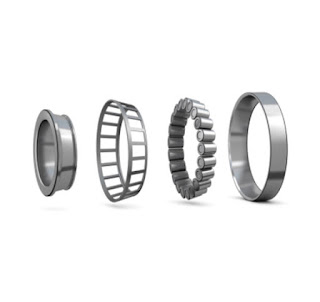
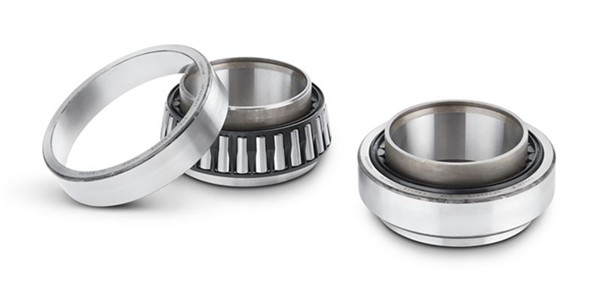
This type of bearing consists of inner ring, outer ring and tapered roller. Because of its design geometry, tapered roller bearings can withstand combined loads (axial and radial). In addition, this design allows the roller to continue to roll even if it slides on the track of the outer ring and inner ring.


Tapered Roller Bearing Details

The contact angle of tapered roller bearing on raceway is variable, which makes the applied axial and radial load ratio can be offset in any case; when the angle becomes larger, it has greater axial load bearing capacity.

Qianyu has a wide range of tapered roller bearings, including separable elements, which can be easily adjusted in application.


This type of bearing is widely used in:

Wheel hub for light, industrial and agricultural vehicles

Gearing (transmission and differential)

Machine tool spindle

Power take off


1. Metric series

Metric tapered roller bearings are designed according to the European international standard ISO 492. They are divided into several subclasses according to their outer diameter and height.

This category uses standard classification method, combines load distribution under optimal speed and high performance, so it will be used in many applications.

2. Inch series according to the American AMBA design standards, mainly in the United States market.

They include detachable and replaceable components that can be easily adjusted in any application.


https://www.lfzc-autobrg.com/tapered-roller-bearing/tapered-roller-bearing.html


MAN Truck Bearings: Reliable Performance for Heavy-Duty Commercial Vehicles

 MAN trucks are known worldwide for their durability, efficiency, and performance in demanding transport conditions. To keep these vehicles ...