2022年9月20日星期二

The 8 Most Common Wheel Bearing Maintenance Issues

Wheel bearings may not be the first item you think of when making your fleet's maintenance checklist. There are bigger components—the engine, the tires, the safety system—that, just by their nature, demand more of your attention.


But that does not mean that wheel bearings can be swept under the rug, as failures can lead to serious consequences, some even as severe as the truck's wheel flying off while driving.


So, with that in mind, these are the eight most common potential wheel bearing issues, and how to spot them.
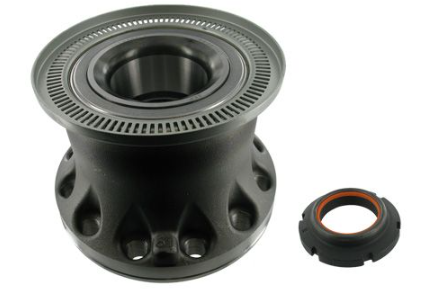

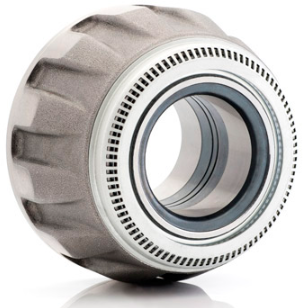
Truck Hub Bearing


1. Bearing set too tight


Wheel bearings should be set between 1 and 5/1000s of an inch (0.001-in. to 0.005-in.), and ideally in the middle of those two numbers.


If it's tighter than one thousand, you're running very close to preload. Imagine the lubrication getting squished out below the rollers. If there's no lubrication layer, there will be metal on metal contact creating heat, which leads to flaking.


The way to tell that it's a high preload is that you will see wear on the large side of the roller. So, the rollers are tapered—imagine if you were to take a cross section: The top would be smaller, and the bottom would be larger. And the wear, if it's more on the bottom on the large side, that's how you can tell that it's from a high preload setting.


The indication of an improperly set bearing comes from a noise the driver will hear on the road.


After hearing this noise,  technicians will isolate which side of the truck, or which axle, it's coming from.


Once they narrow that down, then they will actually inspect that side and then take the wheel end apart.. That's when you will see this actual flaking. But, without actually taking the bearing out, you cannot see or you cannot tell how much damage has already happened.


2. Bearing set too loose


This, Singh says, is more common than the bearing being set too tight.


Typically what happens is, over time, bearing setting will become loose because there's wear and tear," he explains. "And, if the initial setting was too loose to begin with, the more wear and tear happens, the looser it is going to get eventually. So, as you can imagine, if it's too loose, there's going to be a lot of excess play and vibration in the system. This could lead to a multitude of issues not limited to wheel wobble, seal leakage, ABS and braking problems. Eventually a too loose setting will cause flaking at the small end of the rollers/races leading to failure.  If damage is severe, it could even lead to the wheel coming off.


The indications are similar in each case, but you won't know whether the bearing is too tight or too loose until the technician opens it up to have a look.


A loose bearing, specifically, is what can lead to the wheel coming off while the truck is being driven—thus, the consequences can be severe both from a road safety perspective and also from a fleet liability perspective.


The bearing being set too loose or too tight are the most common potential failures, but it's worth quickly running through the others as well.


3. Bearing overload


Overloading isn't common and tends to be specific to certain applications—in the garbage truck segment, for instance. Sometimes you'll see flaking across the entire raceway—it's not towards the left or to the right, so it's not from an improper setting, but from overloading.
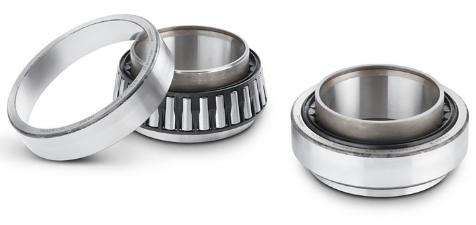

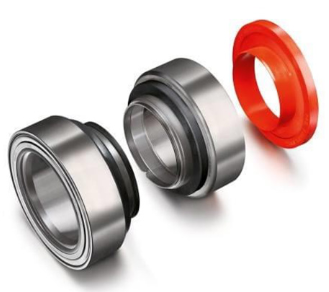
Wheel end hub units


4. Misalignment


Misalignment occurs when the bearings are not seated properly. Improperly seated bearings will still function, but they will not have the full life of a typical bearing. That said, Singh says that this is not a common issue; however, it is possible.


5. Contamination


If the bearing has collected a significant amount of dust before installation, it can stick to the rust preventative substance on the bearing and this could lead to contamination.


While installing, we tell the techs to make sure everything is clean, keep the bearings and all the parts in the boxes until you're ready to work on it.


6. Improper Lubrication


Contamination could also come from faulty lubrication. So, if the lubrication is not clean or if they did not properly flush the old one out, it could be from that, too.


7. Impact Loads


This is a potential issue that can happen during installation. It's not very common, as Singh notes, but possible if technicians do not use the proper pressing tools.


8. Fretting Damage


Fretting corrosion has a rusty appearance and can occur when the race spins or creeps inside of the hub—but, Singh notes, this is not very common at all.


Maintenance Frequency


The answer to avoiding these issues is a simple one: Make sure wheel bearings are part of your fleet's regular maintenance schedule.


How frequently that happens, like all maintenance, depends on your application or schedule. Trucks in the refuse applications, for example, tend to need more frequent bearing replacements than their over-the-road counterparts, because of the wide variations in weights from the constant loading and unloading.


There's no specifically correct interval—but, for instance, when the brakes are being checked makes for a good time to check the wheel bearings as well since the necessary components are being removed anyway.


Qianyu Auto Parts Co., Ltd. is a professional truck bearing manufacturer with more than 20 years of experience in truck bearing manufacturing. The products have passed ISO/TS16949, ISO9001, EU CE certification and other certificates, and the quality is reliable. Approved by customers in more than 50 countries. If you are interested in our products, please contact us now!

2022年9月10日星期六

Why Wheel Bearings Are Important, And What Happens When They Fail

Wheel bearings are designed to promote efficient wheel rotation but can equally become annoying on a long drive when they decide to fail. So here is what can go wrong and how to go about fixing them.


Wheel bearings play an important role within the drivetrain of any vehicle, as they provide the first connection between the moving and static areas of the car. A bearing - in its simplest form - is a friction reduction device placed within something like a wheel to aid efficiency of rotation. This is achieved as rolling produces much less friction force than sliding.


A car's wheel bearing does this by using small metal balls that roll between two smooth rings of metal. Along with grease, the bearing rotates in-tandem with the wheel's rotation, the rolling motion of the balls allowing the wheel hub to rotate as freely as possible.


Wheel bearing


The wheel bearing is housed within the hub assembly, providing the static connection with the hub carrier through an outer ring or 'racer'. The driveshaft travels from the transmission and passes through the centre of the wheel bearing through the inner ring, creating the rotational partnership. Roller bearings are used generally on the driven wheels of a vehicle, while tapered bearings are predominantly used on the non-driven wheels.


Like all mechanical parts on a car that rotate, rub and roll, they tend to wear out. And the tell-tale sign of a wheel bearing that's had its day is a constant drone or hum from whichever wheel is affected at various speeds. There are three general causes of a dodgy bearing:


ㆍIncorrect alignment due to poor installation

ㆍA damaged or leaking bearing seal

ㆍAn inward collision due to a side impact


The most common mechanical failure is due to a seal leak, which allows the lubricating grease to exit the bearing, and water and grit managing to worm its way in. This all amounts to the degradation of the balls and the outer and inner housing of the bearing, often creating that gritty, skimming sound as the wheel is rotating. Looking inside a worn-out bearing, there will often be small specs of metal that have broken off from inside the bearing itself and are grinding their way around the racers, causing more damage.


Considering wheel bearings are generally made from hardened steel, they can stand a serious amount of rotational abuse. But apply heat (through lack of lubrication) and water (broken seal) and all hell can break loose.


Wheel bearing


To replace a wheel bearing properly, it has to be popped out of the hub assembly, preferably using a hydraulic press. Problems can arise with the re-installation of the new bearing, as the alignment must be accurate to avoid the bearing wearing out rapidly and causing further pain. Wheel bearings should last tens of thousands of miles, but many mechanics will simply hammer the bearing back into the hub assembly instead of precisely aligning it and using the aforementioned press. This will inevitably lead to the bearing not rotating in the perpendicular fashion that it was designed for, accelerating wear and damage to the part.


Most online parts stores will now sell the entire hub assembly with the wheel bearing pressed into it, saving the hassle and potential scope for mistakes within the specific bearing assembly.


If left to wear down further, a wheel bearing could seize and lock the axle, so think carefully about your timing if the classic wheel bearing drone starts. However, considering the forces that a drivetrain has to counteract during its lifetime of usage, it is impressive how long wheel bearings can last if inserted properly and looked after.


Although it can be a labour-intensive job if one was to fail, the shift to selling entire hub assemblies should make a bad wheel bearing fixable from home, with a decent tool kit and a bit of know-how. So do not fret the next time that horrid whir begins to creep into the cabin, as a fix may be only a ratchet spanner away.


We are a truck bearing manufacturer. If you are interested in our products, please contact us now!
2022年8月30日星期二

Do You Have Your Trailer Wheel Bearings Repacked Regularly?


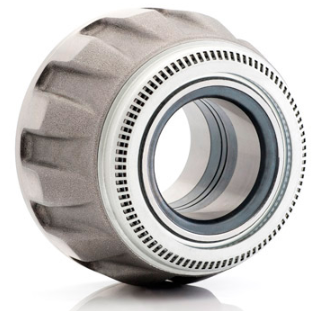
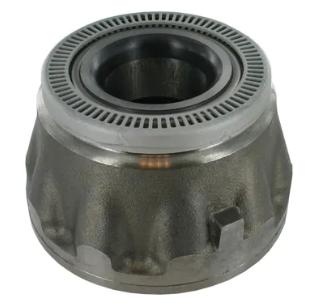
Wheel end hub unit

Wheel end hub unit


Bearings fit into the hub of your wheels and they are what allows your wheels to turn properly. Truck wheel bearings carry the entire weight of the truck so repacking your truck bearings is a critical part of your regular truck maintenance.


Bearings require grease to prevent friction and ensure the wheel turns freely but over time the grease starts to break down. If your bearings are not kept well-greased the increased friction will eventually cause your wheel to seize.


If this happens while you are hauling, it will not only leave you stranded roadside, but it will also cost you a lot of money in truck repairs. Furthermore, if your bearings seize or fail at a high rate of speed it can put you and others at risk of a serious accident.


How can you tell when your bearings start to fail?


1) Sound


You will hear a screeching, grinding, or roaring sound coming from your tires in motion


2) Tire Movement


If you grab your tire with both hands and you are able to move it up and down more than normal this could be a sign that it is time for some bearing maintenance.


3) Steering Abnormalities


If you feel your truck start to veer to one side consistently or there is more play in your steering than there should be then it is likely that it is time to repack or replace your bearings.


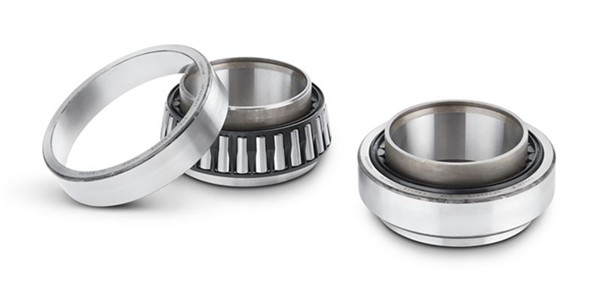
Truck bearing

Truck bearing


How often should truck wheel bearings be repacked?


The axle manufacturers recommend that you repack your truck bearings once annually or every 12,000 km.


If you are over-do truck wheel bearing maintenance, we would be happy to help you. All of us here at Qianyu Auto Parts want to make sure that every trip you take with your truck is a safe and uneventful one!


How much does it cost to repack a wheel bearing?


In a car, it will cost between $100 and $400 on average to have your bearings checked, repacked, or changed professionally (depending on your location and mechanic). Some servicers will provide these optionally during break tune-ups; others do not. Trucks tend to be cheaper to repack professionally (think $100-$200), but don't underestimate the power of the upsells a mechanic might try to give you.


If you're serious about cash, you can likely save a few bucks by repacking your bearings yourself. However, the tradeoff is a few hours of your time to learn and do the procedure, and a probable lack of experience in doing so. You stand to save a considerable amount of money if you do it right though - just make sure you know what you're doing. Best case scenario: find someone who has done it before and ask them to show you how it's done!


Whether you choose to use a professional or do it yourself, weigh the pros and cons of each option carefully before making your decision. We are a high-end auto bearing manufacturer from Shandong. If you are interested in our products, please contact us now!
2022年8月19日星期五

How Do I Know If I Need New Wheel Bearings?


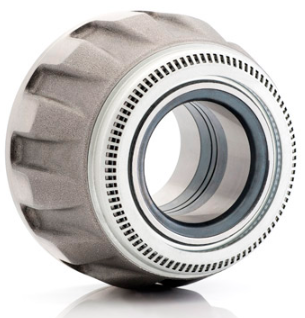
Truck Hub Bearing


Imagine driving on the freeway when suddenly the left front tire and wheel break off, sending your out-of-control vehicle skidding across several lanes of 65 mph traffic. This is reality, and this can happen if you fail to notice the signs the wheel bearings are deteriorating and need immediate repairs. This is not an exaggeration.


What are Wheel Bearings?

Wheel bearings are important components of a vehicle's braking, steering, and suspension systems. The one-piece hub assembly, located between the drive axle and the brake disc or drums, incorporates the hub, wheel bearings, ABS wheel speed sensor, and mounting flange.

It's the component that allows a wheel to turn.

The bearings are tightly packed in a grease-filled, waterproof, sealed metal ring. This housing, called a race, is located inside the hub, and each wheel has one. Wheel bearings have a Herculean responsibility: They are engineered to support the vehicle's entire weight.


What's the Life of a Wheel Bearing?

Wheel bearings are theoretically engineered to last the life of the vehicle. There is no maintenance schedule for replacing wheel bearings, and there is no constant source of lubrication. However, they can be damaged. They are especially vulnerable if you hit a pothole, tall curb, or a speed bump at a brisk speed.

If water, mud, road salt, or sand get past the seal and touch the bearings, it will contaminate the grease, causing the bearings to wear down, eventually leading to fail prematurely. Also, ignoring worn-out wheel bearings can damage the vehicle's constant velocity joint (CV joint) or automatic transmission. The outer CV joint attaches the driveshaft to the wheels, and the inner CV joint connects to the transmission. Find a reputable service technician for advice.


How Much Does It Cost to Replace a Wheel Bearing?

Finally, the cost to replace one front-wheel hub assembly varies widely. Among the variables are the vehicle brand and model, the garage's labor rate, and the cost for parts. The average out-the-door price without taxes is about $350; however, luxury brands are more expensive to repair. If bearings go bad at one wheel, it is unnecessary to replace the bearings at the other wheel on the same axle. Don't let someone talk you into work that is not needed. Get the price estimate for wheel bearing replacement for your make and model of car.


Truck Hub Bearing


Top Warning Signs Your Wheel Bearings Need Replacement


1. Humming Noise

The most easily identifiable and common symptom of bad wheel bearings is audible. But it can be confusing. For example, the source of a humming noise can be linked to other issues, such as tires and the CV joint.


2. Squealing, Growling

The typical sounds of worn-out wheel bearings are squealing and/or growling. The sound intensifies as vehicle speed increases. Try to pinpoint the location of the noise because it will identify the location of the worn-out wheel bearings.


3. Clicking Sound

If you hear a clicking sound that increases in frequency as the vehicle accelerates, there could be a problem with the wheel hub assembly.


4. Wheel Wobble

Technicians can check for wheel wobble by putting the vehicle on a lift and manually checking for wheel movement. Normally, it would be impossible to shake the wheel and tire. However, if it moves, the hub assembly needs immediate attention. The tire/wheel can literally come off the vehicle at any time, at any speed, if the issue is not repaired.


5. ABS Failure

The anti-lock warning light may illuminate. If the ring, tire, and wheel wobble, the wheel's speed sensor are no longer operating properly, and the ABS may operate sporadically or not at all. See a professional for a repair.


6. Uneven Tire Wear

If one tire is wearing out faster than the others, it could be a sign that the wheel bearings are worn. However, it also could be a sign the tire is improperly inflated (too much air pressure or not enough), the tires are improperly aligned, or the vehicle has damaged or worn suspension components.


7. Vehicle Pulls to One Side

Worn bearings may cause a vehicle to pull to the left or right when brakes are applied. The direction the vehicle pulls signals where the worn bearings are located, left or right side of the vehicle. However, this also can be a signal of brake rotor or brake caliper problems.


8. Steering Wheel Vibration

Bad wheel bearings can cause the steering wheel to vibrate. The intensity increases as the vehicle speed increases and the vehicle turns to the left or right. However, the vibration could be linked to an out-of-round tire (there could be a flat spot on the tire) or is no longer balanced. Another cause is damaged or worn suspension components.


9. Steering Feels Loose

If there is excessive play in the steering, meaning the steering seems less responsive less precise than normal, worn bearings could be causing the problem. Also, this could be a sign the vehicle needs a wheel alignment.


We are a truck bearing manufacturer. If you are interested in our products, please contact us now!
2022年8月9日星期二

Wheel Bearing Preload And Endplay Explained


Renault truck bearing

Renault truck bearing


Preload vs endplay both affect wheel performance. Either one can optimize performance. However, because they are pretty much opposite settings, you can't set bearings to both preload and endplay. In fact, setting one will eliminate the other.


Here's Why You Should Care

Wheel separation may sound like something from the Final Destination films, but it is a real thing – and a real problem for truckers. Wheel-offs is one of the most common causes of wheel accidents by big rigs that could be easily avoided if truckers would perform routine maintenance work on their wheel end systems. In this blog post, we will discuss pre-load settings vs. end play. Let's get started.


Why You Can't Ignore Preload And Endplay

It's good to understand preload vs endplay, but it's just as important to know how they influence trucks' operation and safety. For example, bearings with accurate preload or endplay settings promote even tire wear and extend tire life. Proper settings discourage vibrations that can affect seals and brake systems. What's more, proper preload or endplay helps keep bearings working correctly to reduce bearing failure and help prevent wheel-off events from occurring.


Preload

Preload settings on a bearing optimize wheel end performance by eliminating axial clearance. With this setting, pressure applied to the bearings keeps the rollers in place. This allows them to move the way they were built to move.


Endplay

Loose wheel bearings can negatively affect the performance of tires and cause wheels to wobble. Therefore, it is important to take the time to adjust wheel bearings to make sure they have verifiable end play.

According to Timken, wheel bearing end play refers to the free movement of the tire and wheel assembly along the spindle axis. This action is applied to steer, drive and trailer axles using single or double nut systems on Class 6, 7 and 8 trucks and can be achieved with proper adjustment of the wheel bearings. Tapered roller bearing adjustments should always be performed based on the instructions from the same brand's manufactures. If different brands are used, there is a possibility that the procedure for installation will be different. Technicians that risk using impact wrenches to fasten bearings risk over-or-under tightening them. Instead, it is best to use a breaker bar and socket then a torque wrench.

The Technology and Maintenance Council (TMC) Recommended Practice 618B states that a standard wheel bearing should be tightened to .001-.005 inches of end play and can be determined using a dial indicator.


How To Verify End Play

Technicians should perform a few essential steps to verify proper end play in manual wheel bearing adjustments: Make sure the dial indicator is attached with the magnetic base to the hub or drum to achieve an accurate reading. The dial indicator will need to be adjusted so the tip is against the end of the spindle (parallel to spindle axis). Read the end play as the total indicator movement. If TMC recommended end play is not achieved, re-adjust the bearing.

For Pre-Adjusted wheel bearings, the procedure is different; and the manufacture's recommendations should be checked prior to performing the maintenance work. It is important to note that single nut systems will be different from double nut systems (200-300 pounds of torque).


Final Thought

The Commercial Vehicle Safety Alliance just announced the theme of the 2022 International Roadcheck: Wheel-ends. Truckers that are not familiar with what to expect should read this blog post and start replacing wheel system parts prior to the June dates to avoid citations, lengthy lectures from inspectors and failing grades on inspections. By the way, we are a truck bearing manufacturer. If you are interested in our products, please contact us now!
2022年7月27日星期三

Wheel Bearing Troubleshooting and Repair


Truck Hub Bearing


It starts with a noise. With the radio on and wind from the windows, it's easy to ignore at first. But the more miles you drive, that subtle noise grows to a metal-on-metal grinding sound you can't ignore.

You might notice other signs as well, including wobbly steering or uneven wear on your tires. These are all signs of your wheel bearing going bad, and they should all be taken seriously. Otherwise, you may end up losing the wheel while driving, which could be catastrophic.

Our advice? Know the symptoms and causes of wheel hub failure, and get it fixed as soon as possible.


Symptoms of a Bad Wheel Bearing

The symptoms of a bad wheel bearing are relatively straightforward: You'll hear a grinding noise until you're driving fast enough that road noise masks it (50mph and faster). The noise indicates metal-on-metal rubbing at a fast rate and comes from the faulty bearings scraping against their housing and, worse, the wheel hub around them.

If it's the front hub bearings, turning the steering wheel may cause the noise to get worse or change in pitch.


Common Causes of Failure

The most common cause of wheel hub bearing failure impacts. When the tire and wheel hit an object or road defect hard, the bearings can be damaged. Likewise, broken or worn seals can allow moisture or debris into the hub, causing the bearings to deteriorate.

Other things that can cause premature bearing failure are:

  • Out of balance tires/wheels

  • Worn or broken suspension components

  • High performance, low profile tires

Typically, these sorts of long-term wear-and-tear symptoms will also cause damage to ball joints, tie rods, struts, and other chassis/suspension components.

Two other problems that are often left undiagnosed when wheel bearings repeatedly fail are a worn bearing hub and transient current flow through the knuckle. If the bearings were grinding or otherwise making their failure known for any period of time, it's likely that the bearing hub took some damage. When removed, it will show signs of scraping or dimpling. It may also be out of round. Any of these means the hub should be replaced.

Premature wear can also be caused by transient current flow, which is the friction created by faulty electrical grounds which allow current to build upon the moving parts of the chassis. Vehicles build up static electricity during operation and this is usually dissipated by the vehicle's ground points. Bad ground points = bad news.


Solving the Problem

In a shop, there are several methods for finding bad wheel hub bearings, including directional microphones or ultrasound. In the do-it-yourself mechanic's garage, however, simpler methods, though more time-consuming, are just as effective.

Simply listening to the wheel hubs as someone drives the vehicle can indicate which one is bad. With someone driving at 10-20 miles per hour, listen carefully to the grinding sound so you can pinpoint which wheel the noise is coming from.

If the problem wheel hub can be narrowed down to at least one axle, time will be saved. If not, the next test should be done on each wheel.

Safely lift the car and remove the tire and wheel. Then, rock the hub (via the hub itself) with hands on the top and bottom (12:00 and 6:00 o'clock). If there is any giveback and forth (towards or away from the car), the bearing is likely bad.


Replacing the Bearing

Luckily, bearings aren't difficult to replace, and most modern vehicles use either bolt-in or pressed-in bearings. With the right tools, you can perform this replacement by yourself:

  • Park your car on a safe, flat surface and secure the wheels you aren't working on with wheel chocks.

  • Loosen the lug nuts and use the wheel jack to lift the wheel.

  • Remove the lug nuts, and take off the wheel.

  • Remove the brake caliper using a socket wrench.

  • Take off the dust cover, cotter pin, and castle nut. The dust cover is a small plastic or metal cap that protects the rotor's components and can normally be removed with calipers. Beneath the dust covers are the castle nut and cotter pin, which can be removed with pliers.

  • Remove the rotor. First, remove the outer bearing, then the rotor itself. If it gets stuck, use a rubber mallet to jar it loose.

  • Unscrew the hub bolts and take off the old hub. The wheel bearing is behind the hub.

  • Disassemble the hub assembly. You'll need to take apart the hub to get access to the bearings.

  • Take off the races and clean the knuckle. This usually involves breaking the races with a hammer and chisel or a grinder. Once the races are gone, clean the knuckle inside the bearing assembly. Have rags handy – there will probably be a lot of greases!

  • Install the new wheel bearings and races. Have a hammer handy to set the races in place with a few taps, then grease the new inner assembly and install it. Use plenty of greases and make sure the bearings are properly aligned and pushed in as far as they can go.

  • Lastly, reinstall everything in reverse order, and lower the vehicle from the jack.

Pay careful attention to the type of grease employed, the packing itself, and the alignment of the bearings in the hub.


Pressed In Bearings

With pressed-in bearings, which are more common today, the procedure is a bit more complex.

The wheel bearings reside between the steering knuckle and the hub itself, packed between the outer bearing seal and the CV joint. Removing and replacing these bearings requires a press made specifically for the job and each vehicle will be slightly different. Attempting to “pound out” the bearings with a screwdriver or other tool will result in serious damage to the vehicle's hub and/or knuckle. The upside is that when pressed-in bearings require replacement, they are removed and replaced in one-piece units that come pre-sealed and lubricated.

In all, a vehicle's wheel hub failure is most likely caused by something other than the hub. Fixing the hub failure is relatively simple, but diagnosing the cause of the failure may not be as easy.


Introduction of Truck Bearing Manufacturer

Truck bearings are an important part of truck tires. As trucks are often driven on muddy, bumpy roads with poor road conditions and are often overloaded, the quality requirements for truck bearings are even more stringent. Qianyu Auto Parts Co., Ltd. is a professional truck bearing manufacturer with more than 20 years of experience in truck bearing manufacturing. The products have passed ISO/TS16949, ISO9001, EU CE certification, and other certificates, and the quality is reliable. Approved by customers in more than 50 countries.

MAN Truck Bearings: Reliable Performance for Heavy-Duty Commercial Vehicles

 MAN trucks are known worldwide for their durability, efficiency, and performance in demanding transport conditions. To keep these vehicles ...